Just Like Ringing a Bell

Feb 6th, 2008

earanatomy.GIF

I have tinnitus - a common problem amongst musicians and people who work and/or live in noisy environments. Quite a few well-known music personalities do also and have spoken up about it (Pete Townshend, Roger Miller of Mission of Burma, etc), but for those who are unfamiliar with it, tinnitus is a general ringing in the ears that is usually the result of sound over-exposure.

My experience is of a noise floor that sounds something like a million tiny crickets that masks quiet sounds, especially delicate high pitched sounds. In a loud world, this can be less noticeable, but retire to a truly quiet place and…there it is. It is something that never goes away and pure silence is something many of us have not experienced for many years.

For the most part, this has been manageable. But of late, I find it takes less and less sound exposure to induce higher levels of ringing and a feeling of fatigue and sensitivity to sound. Not good.

A few weeks ago, I was on tour with Val Esway and El Mirage and my ears pretty much went on strike. I came to the conclusion that I might have to hang up my guitar and start looking for a new career path. This was sobering.

So I came up with some ideas. One - wear earplugs way more often. Duh, right?! Never been so easy, tho. Earplugs are a bit like aural condoms - get my drift? But on they go for all but the most intimate of experiences. Two - cut back on the use of headphones for recording (really damaging). Three - limit critical audio listening and hours spent in front of speakers. Four - try playing quieter music.

For now the plan is to perform less and work on some more acoustic and low volume electric based music. It is something I am excited about. Change is good and I believe lots of cool music will come it.

Virtual mentors

Nov 28th, 2007

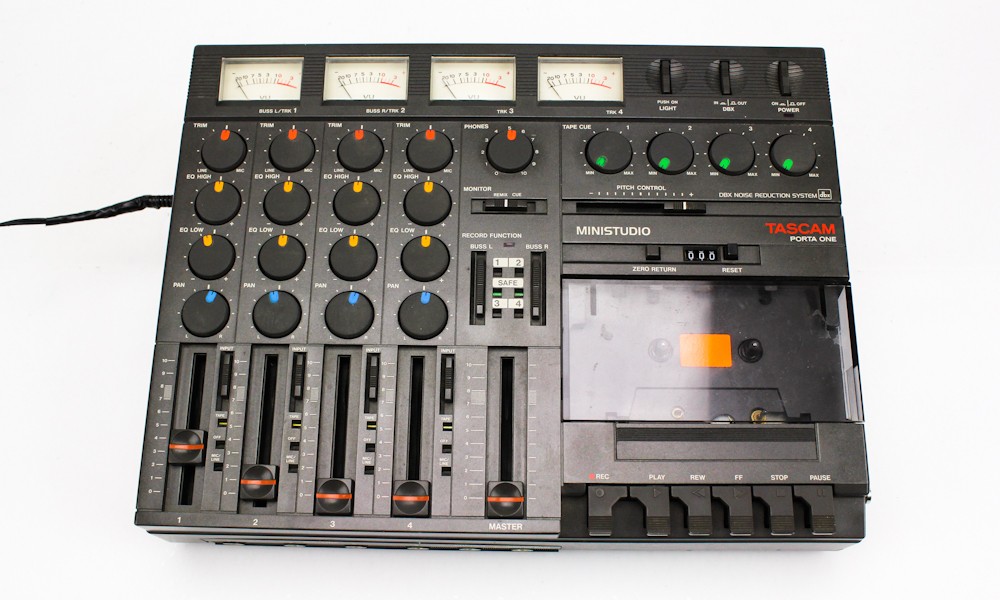
I got into home studio recording over 20 years ago after purchasing a Tascam Porta one four track cassette recorder from Manny’s in New York City. Since then it has been a process of trying to maintain ‘right brain’ musical integrity while not over-using the necessary ‘left brain’ audio engineering side. Reinventing or even fully understanding the wheel is to be avoided. One way to achieve this is to have a great mentor. Friend, great audio tech and fine musican Lawrence Fellows-Mannion has saved me countless hours with his advice and guidance over the years - thanks ‘Rance! Steven Jarvis is another person who helped me when I made the leap to the professional.

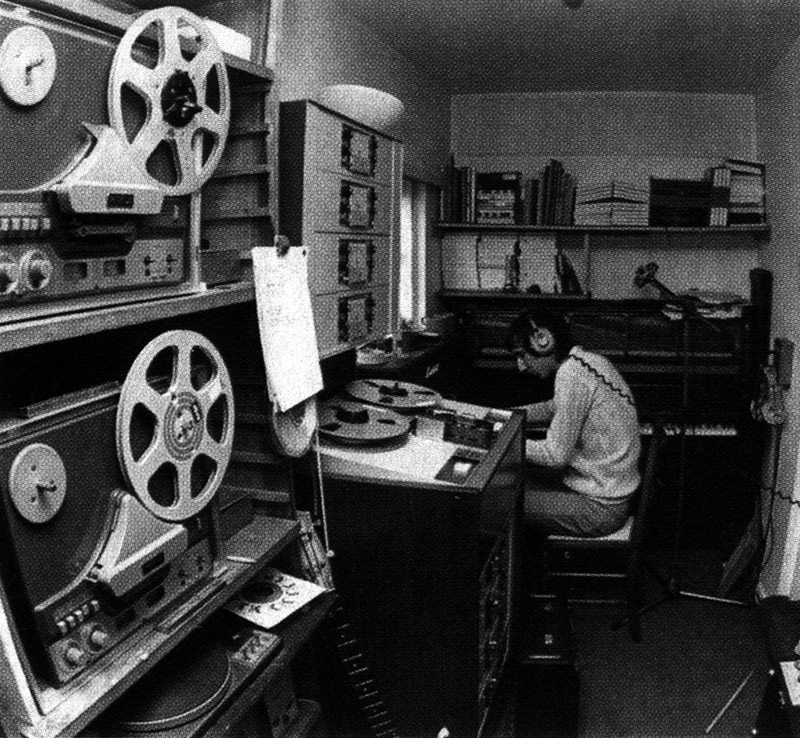
Of course, good mentors are usually very busy, so you gotta have some virtual mentors too. Pete Townshend is one of mine. Besides his great musicianship, Pete was one of the first to grasp the advantage and power of the home recording studio. His Scoop ‘demos’ LP was an early inspiration - especially the tantalizing gear pics and recording details in the liner notes.

Nowdays we have the internet and look what I found today! An amazingly detailed interview with Pete about recording that covers his many studios and methods from the early monophonic to the present polyphony. If you ever wanted a superchared version of the Scoop liner notes, this is it. The snippet below is some of the best advice that could be offered to anyone concerned with making a better studio recording at home:

For the composer, computer tools present a dilemma. For most people, creative ideas emanate and are nurtured on the right side of the brain. However, technical matters are dealt with on the left. So one immediate problem is that before we can get creative with a computer we have to do things like organize our tracks, create a file, make sure we have somewhere to store it, etc. Being able to just run a tape machine (analog or digital) on a whim, always set up and ready to go, is a good thing to have in your life. Or you could have something like an Edirol R09 digital recorder handy. Try to stay in the right side of the brain until the music is properly shaped. Then computers (and compact microprocessor controlled digital studios) are wonderful to arrange and modify what you have composed. For me, tape machines offered a way for me to compose, not to record great music, but merely to write it — as I had no other way of doing it.

Of course those people who work entirely within the computer environment, using loops, MIDI, samples and reflex-driven software like Ableton Live, can get used to making very frequent jumps from one side of the brain to the other. But the music they make tends to sound a little different to the kind of music most of us feel reflects something of the heart. There are many exceptions. This is not a rule, but I often urge musicians I meet who love to work with MIDI software to try some of the old methods — however, getting a decent tape machine is not easy, nor is it cheap.

So remember, start with a good sounding space. And if it sounds bad, fix that first. You may just have to deaden it right down. Next, buy at least one truly great microphone. Next, buy at least one truly great mic preamp. If you can, buy a single module from some old board — an API, a Neve, or whatever. If not, buy a new “classic” channel, or something as good as you can afford. Next, pick your recording medium, and use your brain. If you start with tape, use nothing less serious than a reel-to-reel Revox, TASCAM or Fostex of some kind. If you start with digital hard disk, try some test sessions at different sample rates and bit depths — you may be surprised that your system sounds better at “lower” quality rather than higher because it doesn’t have to work so hard. So, use your ears if you can when making these assessments; pretend to be one of those old jazz guys who could “really” hear. I would recommend using a single pair of earphones for some of these kinds of tests. Pick the ordinary ones used in studios. Use your speakers just for playbacks of these tests and checking detail. If you can afford none of these things, buy a small tape Portastudio. Four tracks will sound better than eight. Remember that what you are doing is using a medium, not a modifier.
Kingtone Studio

Oct 11th, 2006

This the history and evolution of my recording set-ups. The idea was lifted from the liner notes to the Pete Townshend “Scoop” LPs.

Studio #1 1985-1989 Various east coast USA locales. 4 track. Purchased the venerable Tascam Porta-One cassette from Manny’s in NYC and a couple of Shure 57’s. Recorded ALOT of demos, ideas and several cassette releases.

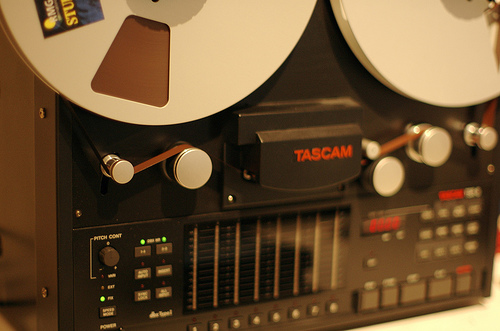
Studio #2 1990-1997 Boston, MA, CT and SF, CA. 8 tracks. My first real studio with a Tascam TSR-8 1/2″ open reel deck, Seck 1282 mix console, Tannoy monitors, Sony DAT deck, Lexicon reverb and a Symetrics compressor. All very decent sounding and popular semi-pro gear that I acquired while an employee of the now defunct EU Wurlitzer Music in Boston (thanks David Bryce and Ducky Carlisle). I eventually purchased a few more mics including a really nice AKG 414TLII, made many demos and several records.

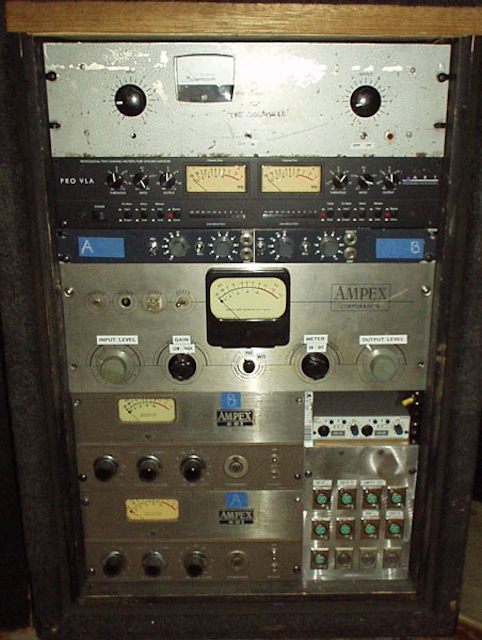
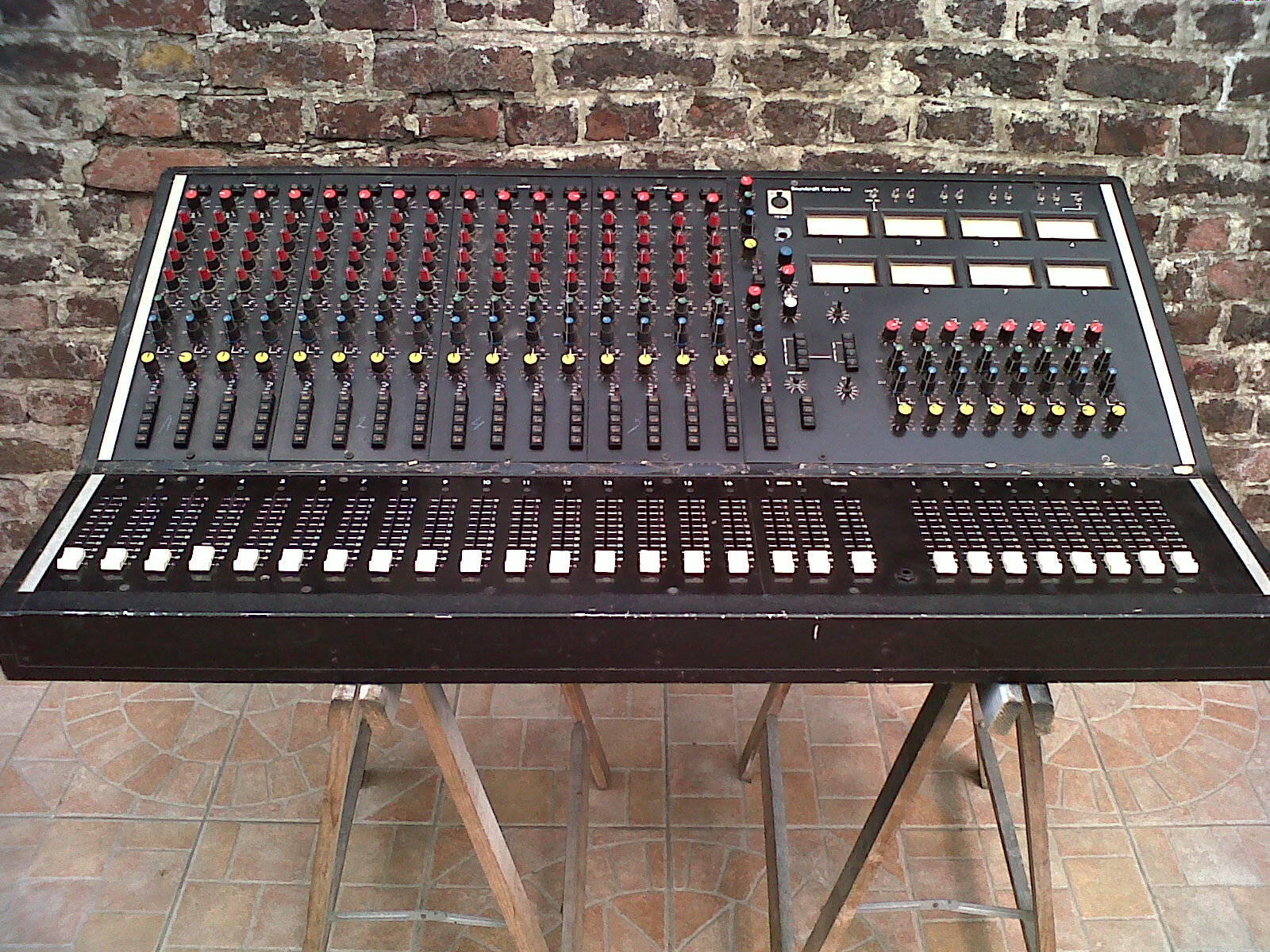
Studio #3 1999-2002 Berkeley, CA. 8+ tracks. I moved into a warehouse complex right on the train tracks in West Berkeley and made the move to (mostly vintage) pro gear (with the help of my good friend and SF bay area audio guru, Lawrence Fellow-Mannion). The centerpiece was a beautiful 1969 3M M23 1″ 8 track that I found sitting in a forgotten corner of El Cerrito Guitar Center, a late 70’s Soundcraft Series II 16/8/2 desk from Wallysound, a couple of Dan Alexander Neve 1272 and Ampex 601 mic pre’s, some good compressors, an Otari MX 5050bIIb 1/4″ deck and a tt patchbay with fancy quad cabling. I added an amazing Lawson L47 tube mic and a Coles 4038 ribbon to the collection. My friend Ricardo Esway, chipped in some digital gear including 8 channels of MOTU digital in/out (that paled in comparison to sound of the M23).

The tracking room had great sound and fantastic reverb decay due to the 30′ arched wood ceiling. We built a proper double-walled control room but left the rest of the space as is (ie not remotely soundproof). Amazingly the trains that frequently roared by rarely interfered with recording…

I eventually moved out of the space and broke up the studio (no more tinkering and soldering!). The M23, Soundcraft and patchpay live with Chris Butler and his vintage collection in Hoboken, NJ, but I did keep some crucial gear…

Studio #4 2002-2003 - Emeryville, CA. 8track. I struggled for a year with a free version of Protools 4.0 and an old Digidesign Audio Media III card (16 bit, 2 i/o) running on a really old Mac 7600 (G3) in a dark and dank rehearsal studio. The setup was hodgepodge and without a proper patchbay, but it sounded okay. I recorded alot of cool music - much of it for the Immersion Composition Society.

Studio #5 2003 to 2006. 16 tracks+. I moved to a more spacious and brighter studio and fully committed to the digital age after discovering and purchasing a ‘vintage’ DAW platform, PARIS. Fantastic sounding, stable, with really intuitive (ie analog) recording, mixing and editing capabilities. 16 tracks, 24 bit, no latency with real time fx, eq and aux capability and a decent control surface. Since it had its own processing power, I ran it for years with my old 7600 with no problems. I added a sweet Ampex 350 mic preamp (rebuilt by Rance) and a FMR audio Really Nice Preamp to the setup which was now neatly contained in two roll around racks.

Studio #6 2006-2007. The PARIS system’s main card died - RIP. Faced with the prospect purchasing another card with a limited life span and continuing to run OS9, I chose to sell the PARIS parts off. I’ve since been using an MBox I found for $200 to access Pro-tools.

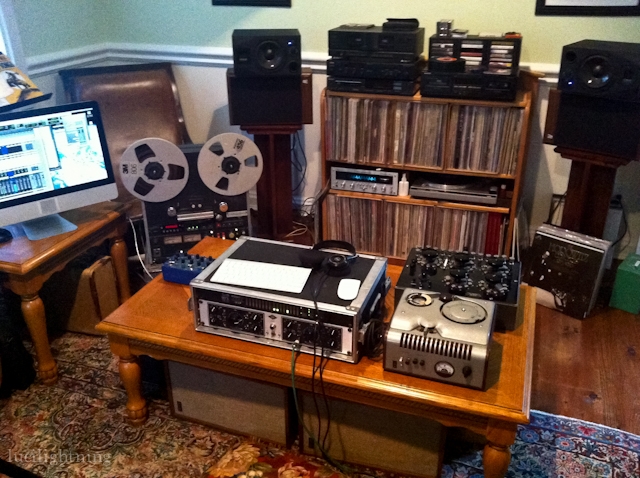
Studio #7 2008. Of late, I’ve been obsessed with keeping the smallest footprint possible - something both portable yet totally pro to track with - making do with what I already have excepting a few necessary upgrades (it’s about THE MUSIC right?!). There are so many options available these days it sets your head spinning but it boils down to two or three paths. Digital recording involves living with certain compromises and after a bit of trial and error and several false starts, I decided on a Metric Halo firewire AD/DA interface running Digital Performer and Protools (thru an Mbox) running on a black MacBook. This setup gives plenty of ultra high quality ins and outs. The addition of a Mackie Big knob (great piece of gear) has enabled me to do with out a mixer and keeps my table top nice and clean and I also picked up an M-Audio Sputnik tube mic that is really great. Small, mobile and powerful.

The Set-up

It is 1993. I have just moved from New York City to San Francisco. I’ve found a nice little studio apartment on the second story of a nondescript beige/pink building on Jackson Street - between Nob Hill and Chinatown - a steal at $550. There are parrots in the tree branches outside my window. They are loud. There is a very strange large, bald man who lives upstairs and tells me about his experiments with acid in the 60’s. They involve lying naked in bed for a week in a fetal position. His exaggerated speech, gestures and facial expressions remind me of the father of the voodoo woman who helps Johnny Angel find the “Dark Prince” in the movie “Angel Heart” (and ends up face down in a pot of boiling gumbo for it).

I don’t have a job, the girl I chased halfway across the country doesn’t seem that interested anymore and I’m desperately looking for something to latch onto. I’ve come to realize that every long term friend I’ve ever had is three thousand miles away. I exist in a world full of acquaintances.

I seem to have time for many things. I do some useless temp work for Charles Schwab. There, I make a lot of long distance phone calls, steal computer diskettes, pens and everything else that isn’t nailed down. My car gets many parking tickets. I now take buses and walk alot. I peruse bookstores. In one such place, I find a used copy of Anthony RobbinsPersonal Power. How many times have I seen those late night 30 minute info-documentaries with this charismatic gent emphatically pitching his way for everyone to get their shit together? Well, I ain’t paying 300 bucks for the tapes, but I will pay $6 for the book.

I read the first three chapters. Basically it says, “decide what you are going to do today and then go out and do it - especially if you have no idea how to.” Fair enough.

* * *


In 1993, Pete Townshend put out the reco
rd Psychoderelict and was doing his first ever solo tour to support it. The night before in Berkeley I had attended the first of two sold out shows and was happy to have been able to see him in the relatively intimate 3000 seat Berkeley Community Theater. It was a very good show. I go to bed feeling inspired. I awake the next morning and the Personal Power question stares me in the face:

“What are you going to do today?” Hmmm….

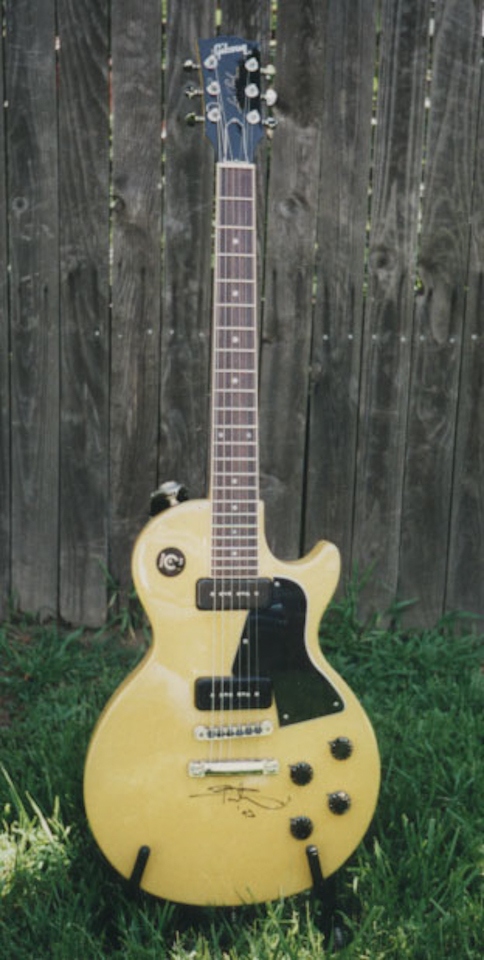
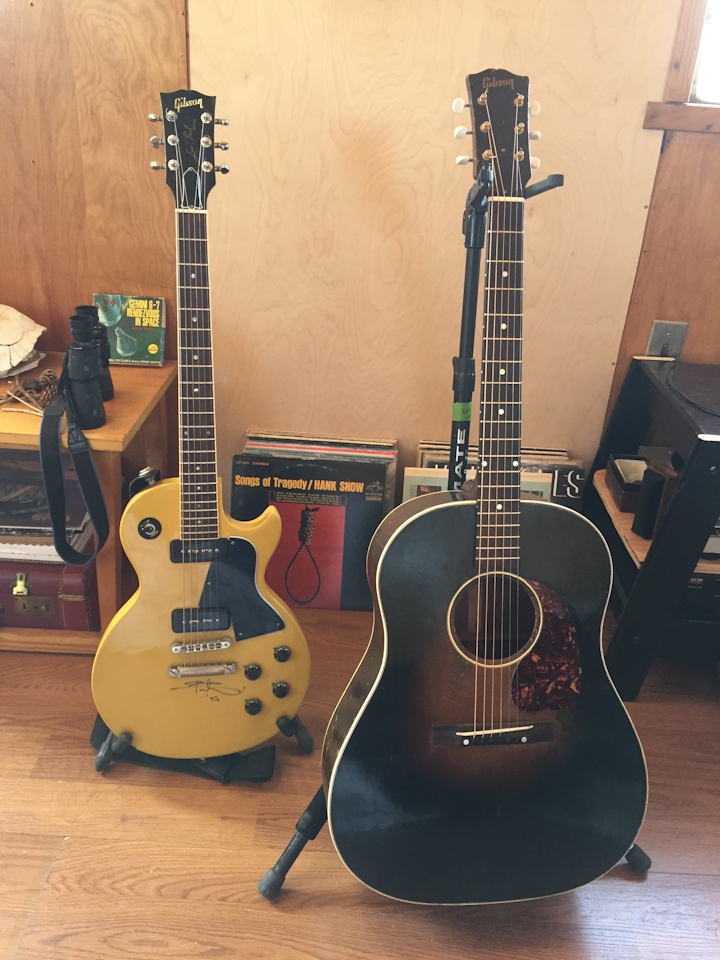
I am going to meet Pete Townshend! I’ll thank him for being who he is, let him know how big an inspiration he has been to me and have him to sign my favorite guitar - a TV-yellow Gibson Les Paul Special.

Pretty tall order. So, how to go about it?

The Plan

…Well, I figure the best bet is to go back over to Berkeley and catch Pete at sound check before the second show - somewhere between 3:00 and 5:00 pm. I climb into my 1989 Toyota 4Runner (ahh, a gem that got away - the last year it came with a removable top and the first year with a V6 engine) and head over the Bay Bridge to the far away land of Berkeley, California.

I’m headed up what turns out to be Shattuck Avenue in Berkeley - not far from my intended destination, but I am completely lost and, of course, listening to The Who. As the last strains of Who’s Next taper off, the tape pops out of the deck and 1989 Toyota technology kicks in hard as the “auto-radio” function does it’s thing. Lo and behold, there’s Pete’s voice. Ahh! I’ve got him!

I spot a phone booth, abruptly pull over, search madly through the phone book and find the address of KFOG 104.5 FM in San Francisco. I write down the address (nice of me not to tear out the page, right?) and head back the way I came.

As I re-cross the Bay Bridge, I realize how incredibly beautiful it is here! Not a cloud in the sky - a perfect blue gradient from the white of the horizon to the deepest blue overhead. The rusty red spires of the Golden Gate bridge jut out over the horizon to my right. The San Francisco skyline is up ahead. I notice that most of the buildings in San Francisco are white - it is a very white city (not just the population). If you’re from here you might not notice that, but I can tell you that New York City is much more of a grey/dark brown…anyway, I fly through traffic listening to Pete talk about music and think, “Don’t you get off the air, fucker!” He sings a song from Psychoderelict (an interesting concept record but, unfortunately, one that contains very few tracks that qualify as a “song”). His voice is shot and he doesn’t sound great, but I’m not complaining. As long as he keeps talking.

It is now rush hour. Cars are just about everywhere and I’m in downtown SF. I make an inspired, lucky left turn and end up just a few blocks from my destination. I spot a long black limo double-parked up ahead. This is it! The parking goddess is with me and I nab a spot just a block away…

I rush over to the limo and start knocking on the rearmost window. The black mirror facade rolls down and an English gent’s long face appears in its place. He asks politely what I might want. I tell him I would like to speak to Pete. He replies, “He’s still inside, you’ll need to talk to his manager over there.” I look over and standing on the sidewalk, having a smoke is Pete’s manager, who has been keeping and eye on all this. He is nice enough when I repeat the question and tells me to wait for Pete to come out. I ask him if Pete might sign my guitar. He informs me that “Pete doesn’t sign guitars.” Yeah, well…

I am standing on the sidewalk in front of a glass enclosed lobby with a clear view through to the silver elevator door not 25 feet way from me. There is a black canvas soft guitar case slung over my right shoulder. In it is my favorite guitar. The one I use the most. A Gibson “TV-yellow” Les Paul Special named “Mean Mr. Mustard.” There’s a pin on the strap that says “Thunders lives!” (I got the pin while Johnny Thunders was still alive - which was often a tenuous state for him). I stand there for a long time. I begin to realize that this is actually going to happen…What to say! “Hello Pete! Uhh, Hi Pete, uhh…”

After a few minutes or so of this, I spot a middle aged man running up the street. He stops in front of me and breathlessly asks if Pete has come out yet. Perhaps he thinks I’m Pete’s manager. In his hand, he reverently holds a small, white paper napkin. Apparently, he seeks an autograph. I inform him that Pete hasn’t yet materialized, but that he can wait in front of me.

We wait some more.

And then suddenly, there he is.

Pete pushes through the glass doors and seems in a bit of a hurry. Looking perfectly English in a grey tweed coat he approaches us and quickly, but politely, signs the napkin of the fellow in front of me. He then looks at me standing there with a smile and a guitar over my shoulder. Since I ask for (and seemingly offer) nothing, his demeanor changes in the minutest way. His weight shifts backward and he pauses as if to say, “right then…”

The Conversation

Shit! What do I say? I was silent for a few moments as I was a bit distracted by Pete’s gaze. He has very intense blue eyes. They search. He is obviously interested in people. Behind Blue Eyes and all that.

I finally started in by thanking Pete for his inspiration. That he was one of the main reasons I picked up the guitar in the first place and continue to this day. That perhaps my parents were not so much in debt to him as I was since they’ve never really understood the whole process to begin with. I have no idea why I said that. It just came out. No comment from Pete.

I told him about seeing The Who at Madison Square Garden in the fall of 1979. How when the the bright white lights lit up the crowd during Won’t Get Fooled Again there was a certain 16 year old boy standing on a railing above the crowd, his arms stretched toward the ceiling in ecstasy - just about 50 feet from stage left at eye level - when Pete Townshend had suddenly pointed at him. He grinned and mentioned that he “vaguely remembered those shows” (ed note: Pete was quite a drinker in those days).

I told him that I had seen the show last night in Berkeley, which had prompted me to seek him out today and that I very much enjoyed the reach of his new work. That it was important he was still taking risks, however good or bad they might be or be received. He very much appreciated that.

I then mentioned that I too was a musician playing original music and doing all I could toward that end - the same as he.

At this, I asked him, “Would you sign my favorite guitar?”

He did not hesitate with his answer,

“Sure.”

A sharpie pen was produced and the guitar signed, just below the tailpiece where it would be rather safe from wear and tear.

Until now, Pete’s entourage had stayed respectfully away, but was starting to shuffle a bit. As Pete made a turn to leave, I thanked him again and said,

“Hey Pete, keep on pushing.”

He turned back and said,

“I intend to.”

*** *** ***

It has been over ten years now and I don’t play the guitar as much. Mostly because I love my Telecasters, but also because I don’t like hauling it to gigs.

I have used it for shows with the HO! (our tongue-in-cheek 70’s era Who cover band) as a backup to my red Gibson SG and for the songs that needed a capo. In fact, at our last show the SG got damaged and for My Generation, I went to the PT signed Les Paul Special and proceeded to bash it around on the stage and snapped the bottom straplock off of it in true Pete fashion. It’s a working guitar, dammit. You can witness it at the end of this promo trailer:

I still use it for recording and every once in a while I take it out when I feel like jacking up some power chords though my Hiwatt head. It always feels right.

A friend asked recently if I ever worried about losing the guitar.

I believe my response was, “It doesn’t really matter because I’ll always have the story.”